

The ancient walls and the Guelfa tower

The ancient walls of Iglesias are the ruins of medieval fortifications surrounding the current historic center of the city. In the past, the walls were interspersed with 23 towers and 4 gateways: Porta Maestra to the south, Porta Castello to the southeast, Porta Sant’Antonio to the north, and Porta Nuova to the west; the gateways to the ancient city. Built with mixed stone, the walls, approximately 7 meters high, have been repeatedly renovated by the peoples who have succeeded each other in the city, first the Pisans and Aragonese and then the Arborenses. Despite the expansion of urban development incorporating several stretches into private homes, part of the walls remains well preserved and maintains the massive characteristic of medieval military fortifications. Along a unique wall path in Sardinia, stands out the Torre Guelfa, located at the highest point overlooking the entire city and the surrounding territory. The ancient walls and the Torre Guelfa are visitable independently.
Salvaterra Castle

The castle of Salvaterra, known in the past as the castle of San Guantino, was built in the medieval period, after 1258, probably by the will of Count Ugolino Della Gherardesca. Built on the Salvaterra hill, from which it takes its name, at the time it had a strategic position that allowed it to oversee the city and communicate with the other castles in the territories of the Republic of Pisa: the Castle of Villamassargia, the Castle of Acquafredda di Siliqua and the castles of San Michele Castro in Cagliari. At the end of the 19th century, it completely lost its military function and was joined to a neo-gothic villa and a glassworks, both designed by engineer Edoardo Sanna. Today, the castle offers a splendid view of the city, hosts several events, but above all, it hosts the permanent exhibition of Storia Medievale e Torture (Medieval History and Torture). The exhibition includes weapons, armor, war machines, and torture devices used in the Inquisition trials. INFORMATION Address: Via Monte Altari, 09016 Iglesias CI Telephone: +39 351 97835669
Monumental Cemetery

The Monumental Cemetery of Iglesias, inaugurated on August 20, 1835, was built near the Church of Beata Vergine Maria di Valverde, outside the city walls. Due to the progressive increase in the population, it was found to be insufficient and was subsequently expanded several times starting from 1850. Thanks also to the contribution of the most important artists of the time, it soon became a real showcase of works of art, almost like an “open-air museum.” The monumental complex consists of a rather large central part, surrounded by imposing walls, adorned with cypress avenues and Mediterranean essences. Carefully maintained and frequented regularly by the population, linked to the memory of their loved ones, it is one of the main monumental emergencies of the city. The cemetery is famous, in particular, for the sculptures of Giuseppe Sartorio (1854-1922), a prestigious artist who initially gained fame for being commissioned by the Piedmontese leaders of the Iglesias mines to erect some statues in the city. Sartorio’s skill and splendid creations immediately contributed to his fame, transforming him into one of the most well-known and appreciated artists in all of Sardinia, where he established two workshops, one in Cagliari and the other in Sassari. In the cemetery of Iglesias are present 65 works of his sculpture.
Cloister of San Francesco

The church and convent of San Francesco are among the most interesting and precious testimonies left by the Frati Minori Conventuali (Order of Friars Minor Conventuals) in Sardinia. The cloister was an open space surrounded by four sides of porticos. The convent incorporates several wings developed on the model of open loggias on the ground floor, arranged around a green area that was accessed by large round arches in pink trachyte. Unfortunately, the lack of documentary sources and the damage suffered during the 1940s (when it was used as an air-raid shelter) do not allow us to assert whether the cloister we see today is the original one. Currently, as a result of restoration work, a part of the original complex has been recovered.
Asproni Mining Institute

The Istituto Minerario “Giorgio Asproni” (Giorgio Asproni Mining Institute) was established in 1871 by the will of Minister Quintino Sella, a statesman who gave a strong boost to the mining activities in the Iglesias area at that time. The deputy believed it was necessary to provide the city, which was then at the peak of its mining activity, with a school that would train miners and foreman for the mines. The Institute, whose classrooms and laboratories still miraculously retain the atmosphere of the late nineteenth century, has carried out a glorious teaching activity to this day, graduating experts who have worked in deposits all over the world. Today, the historic building only houses part of the Institute’s teaching activities and is open to visitors who can admire its rich mining collection. The basement of the building houses the Museo dell’Istituto Minerario (Mining Institute Museum).
Discover the mining sites of Iglesias and their glorious history

The territory of Iglesias is undoubtedly the protagonist of the mining revolution in Sardinia. In the past, the high presence of mining resources attracted the great Mediterranean powers, who started an intense exploitation of the metal mines in the Iglesiente area. Today, the city bears witness to a glorious mining past acknowledged worldwide. Here are the mining sites that you can visit during your vacation in Iglesiente: Porto Flavia You cannot visit Iglesias and not stop by the “port” that revolutionized the system of mineral transportation. The port remained operational until the 1960s and was dismantled with the progressive abandonment of the area’s extraction activity. At the end of the 20th century, Porto Flavia underwent a restoration intervention and is now open to tourists through guided tours. DISCOVER PORTO FLAVIA Santa Barbara Cave Another jewel of the Iglesias territory is Grotta di Santa Barbara (Santa Barbara Cave). A surprising discovery made in 1952. During the excavation for the construction of a tunnel, workers found this spectacular cave. The large natural cavity was unknown to the scientific world because it was hidden inside the heart of the mountain. DISCOVER SANTA BARBARA CAVE Laveria Lamarmora It is one of the most fascinating and suggestive mining complexes throughout Sardinia. It is located in Nebida, a village of Iglesias, 15 kilometers away. From the original complex, it remains today, besides the amazing laundry on the sea, the construction of technical and administrative offices and the small mining village. DISCOVER LAVERIA LAMARMORA Monteponi The impressive complex just outside the city of Iglesias represents one of the sites included in the geo-mining park of Sardinia. It is one of the most fascinating and well-preserved sites of industrial archaeology. During its golden period, Monteponi hosted up to 1000 workers. During the mining era, the structures for the extraction activity were also built: Pozzo Sella and Pozzo Vittorio Emanuele, connected by the Galleria Villamarina. DISCOVER MONTEPONI
Iglesias in 3 days: exploring the mining town
Among the extraordinary towns of Southern Sardinia, Iglesias is definitely worth a visit. The city was once known in ancient Pisan as “Villa di Chiesa” before becoming “Iglesias” during the Spanish domination. Iglesias has just over 27,000 inhabitants and is famous for its wild coast and glorious mining past that has characterized it. The city is rich in cultural attractions, breathtaking landscapes, and ancient traditions. Here is a small 3-day itinerary with all the unique places of this magnificent territory! Day 1 To start getting to know Iglesias, there is nothing better than walking through its historic center. One of the most peculiar features of the city is undoubtedly the ancient medieval walls, whose good state of preservation can still be seen today. During the walk, you will surely be surprised to come across Piazza Lamarmora, a pretty square that turns into a triumph of colors during the summer thanks to the installation of small umbrellas. Iglesias is known for its numerous churches: the most important is undoubtedly the Cathedral of Santa Chiara , the first cathedral in the world dedicated to Saint Clare of Assisi. Given its mining past, to fully understand the city’s history, it is essential to visit the Museo dell’Arte Mineraria (Mining Art Museum) hosted in the Istituto Minerario Asproni (Asproni Mining Institute). Day 2 The city is so rich in cultural and natural attractions that on the second day of the visit, there will be many choices. In the historic center, on the top of the hill, stands the Salvaterra Castle, built in the medieval period, which now houses the permanent exhibition “Medieval History and Torture.” Another important place to visit is for sure the abandoned Monteponi Mine, one of the most fascinating testimonies of Sardinia’s mining history. In the past, the site was one of the main extraction plants in Italy, with modern buildings and state-of-the-art structures. To end the day, Piazza Sella plays a central role from a social point of view as a meeting place for citizens. The benches and large flower beds surrounding the centuries-old trees will provide a framework for a moment of relax. Day 3 The third day is dedicated to the exploration of the monument of industrial archaeology that revolutionized the mining industry in the area. Porto Flavia is a true engineering masterpiece that reduced the times and costs of mineral transport. In addition to the beautiful history of this place, the view from the mining site of Pan di Zucchero, one of the highest natural sea stack in Europe, is equally magnificent. The day continues at Laveria Lamarmora, one of the most suggestive monuments of the mining landscape. This place, so rich in history, is also one of the favorite photo spots in the Iglesias area. At sunset, the abandoned facility turns into an incredible landscape.
The millenary history of Iglesias: from 6000 BC to today

On the southwestern coast of Sardinia, located on top of the hills close to the Cixerri valley, lies the town of Iglesias. Beaches, hills, green valleys, and the Parco Geominerario Storico Ambientale Della Sardegna (Historical and Environmental Geominerary Park) that preserves the entire history of human mining activity, from its origins to the most modern technologies. It is above all its history, architectural heritage, ancient testimonies of the Middle Ages, the many reminiscences of Spanish domination, and its churches that captivate and capture the attention of even the most demanding traveler, who love history and archeology. Here, the charm of the origins is preserved by medieval churches in which the signs of a glorious past are stratified, that of a city formerly called Villa di Chiesa. This name originates, it seems, from the large number of places of worship that were built in the Middle Ages. Moreover, it is precisely the large number of ancient and modern places of worship that still characterize the urban fabric of the current city. 6000 – 750 BC. The territory of Iglesias was inhabited since ancient times, as remarked by the extensive outdoor settlements on the hills surrounding the city: Cruccueddu, Buoncammino, Monte Altari, Pizzu ‘e Pudda. The ancient Copper Age is documented in the domus de Janas of San Benedetto and in the village of Via San Leonardo. 750 BC – 476 AD. Phoenicians, Carthaginians, and Romans, attracted by the mineral resource,, occupied the coastal areas. The Carthaginians erected the temple of Matzanni in white travertine on the slopes of Mount Cuccurdoni Mannu on the administrative island of San Marco. The settlement of Corongiu, the Canonica bridge, and the nearby arcosolium tomb of Monte Pitzuga date back to the Roman period. 476 – 1258 With the Vandal conquest (456 – 534 AD), the sending of a colony of Maurusi to the Southwest determined the imposition of the name Maurreddìa on the region and Maurreddus on its inhabitants. The seat of the Sulcitana diocese, first located in Sant’Antioco and then, in the XIII century, in Tratalias, was transferred to Villa di Chiesa between 1355 and 1362. The ruins of numerous churches belong to the late Byzantine period. Within the walls, the churches of Santissimo Salvatore, Sant’Antonio Abate, and San Saturno (now Madonna delle Grazie) are noteworthy. 13th century. In the Cixerri valley, which was progressively populated by scattered villages, Ugolino della Gherardesca, Count of Donoratico and Lord of the sixth part of Cagliari, founded the town of Villa di Chiesa, mentioned for the first time in a document from 1272. The territory, rich in lead-silver and therefore also known as Argentaria, saw a revival of mining activity. In a short period of time, Villa di Chiesa developed, manifesting the need for a statute that regulated both city life and the extractive activity of nearby mines: the Breve di Villa di Chiesa. The Pisan period was an exceptional phase in the history of Iglesias, which became the most important center in southern Sardinia after Cagliari. 1323 In June 1323, Iberian militias landed in Palma di Sulcis and headed directly for Villa di Chiesa which, after a long siege, was forced to surrender on February 7th, 1324, obtaining the right to honorably lay down arms. Thus began the period of Catalan-Aragonese domination. Five days after the occupation, the infant Alfonso granted the city the privilege of minting silver coins and, in 1327, approved and confirmed the Breve di Villa di Chiesa. In April 1354, the city was burned and destroyed during the war against Mariano d’Arborea, who succeeded in seizing it. Once in possession of the city, Peter IV of Aragon ordered the reorganization of the walls. However, the situation remained confused and agitated due to the continuous reignition of conflicts between the Crown of Aragon and the Giudicato of Arborea. Struggles and destruction caused a standstill in economic activity. 1479 Sardinia passed to Spain without bringing about any changes. Inept Spanish rule and the plagues of the 1600s had a heavy impact on the territory and the mines were abandoned. 1720 Only in the 18th century, when the Island became part of the Kingdom of Sardinia, did interest in mining activity revive. In the second half of the 19th century, due to the exploration and extraction of various minerals, a numerous and competent workforce was created, and the facilities and equipment were perfected. In addition, new companies were born. In a few decades, with the mining industry, Sardinia managed to conquer an internationally significant position, including Iglesias. The population reached twenty thousand inhabitants. 1900 The crisis in the agricultural sector at the beginning of the 20th century brought around 16,000 workers to Iglesias, and almost all of them were employed in the mines. The exploitative and miserable working conditions of the workers caused accidents and clashes. On May 11, 1920, strikers in Iglesias clashed with Carabinieri and royal guards. Seven people were killed and twenty-six were injured. During the fascist period, with the autarchic policy, the mines received a new and significant boost, especially for the coal exploitation in Sulcis. However, Sardinian coal, difficult to extract and of poor quality, could not withstand the competition from coal produced by other countries for long. In the last decades of the 20th century, Sardinian mines had taken on a position of inferiority in the global market. The continuing depression of lead-zinc prices, the progressive impoverishment of deposits, and the enormous financial effort required led to the cessation of all mining activities. Today Iglesias is a new city. The hopes and energies of the area are focused on increasing the economy with new activities related to the tourism and hotel industry, in which the mining structures are considered jewels of industrial archaeology and find suitable placement.
Getting married in Iglesias: the perfect places for your big day
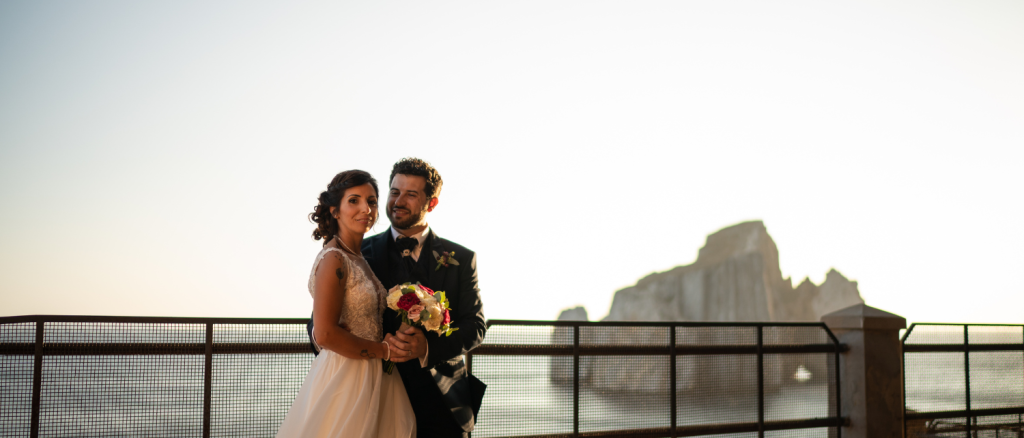
Don’t miss the opportunity to celebrate your wedding day in a unique and magical territory like Sulcis Iglesiente. Iglesias offers views of incomparable beauty and can make your wedding day unforgettable. For those who want a civil ceremony, the city offers indoor and outdoor locations where you can tie the knot. Civil ceremony in communal spaces For a civil ceremony, Iglesias offers the following locations: The cost of the locations varies depending on residency: residents (at least one of the spouses), residents abroad, or residents in another municipality. For more information on costs and procedures, it is recommended to call the Civil Status Office at 0781 274324 or visit the same office on Via Isonzo.